
Trace Colquitt County Former Owners by Record Era
Each record era leaves its own trail. The GSCCCA search systems are the modern starting point for Colquitt County deed records. Deeper generations sit in Clerk of Superior Court volumes, plats, probate material, and local history collections around Moultrie.
| Source | Years It Covers | Where Held | What It Shows |
|---|---|---|---|
| GSCCCA Real Estate Index | Statewide baseline since at least 1999 | Online, with gated modes or images | Grantor, grantee, date, instrument, book-page |
| County deed books and microfilm | Earlier recorded years | Clerk and archival finding aids | Transfers and legal descriptions |
| Plat Index and Clerk plats | State plat system since 2004; older local plats may exist | GSCCCA and Clerk | Subdivision, lot, block, and easement context |
| Moultrie directories | 1906 to 1970, with gaps | Digital Library of Georgia and Odom Library | Old-address and resident leads, not title |
Begin the chain online. Recent Colquitt County deed records surface quickly in the statewide index. When a result lacks an image or points into an older deed book, note its book-page, parties, and date, then take those details to the Colquitt County Clerk of Superior Court. The statewide index does not guarantee full image coverage. Treat it as a doorway, not an archive.
Begin Colquitt County's Prior-Owner Trail With the Newest Deed
The newest deed holds the key. Its grantor is the immediate prior owner of record. Record both parties exactly, along with execution and recording dates, instrument type, book-page or document number, consideration, and the full legal description. Then search that grantor as a grantee in an earlier Colquitt County deed index. Names alone prove nothing. Compare spouses, initials, estate or trust styling, entity spelling, acreage, subdivision, lot, block, and adjoining owners, because a similarly named person who conveyed different land sits outside the chain of title.
GSCCCA Reaches at Least 1999 for Colquitt County Deed Indexing
GSCCCA states that its Real Estate Index covers every Georgia county back to at least January 1, 1999, with historical material added over time. The Plat Index and Lien Index began in 2004. Those are official statewide service dates. They do not prove how far back Colquitt County deed images reach. The official search landing page is that gateway. It leads to the deed, lien, and plat systems behind Georgia property records.
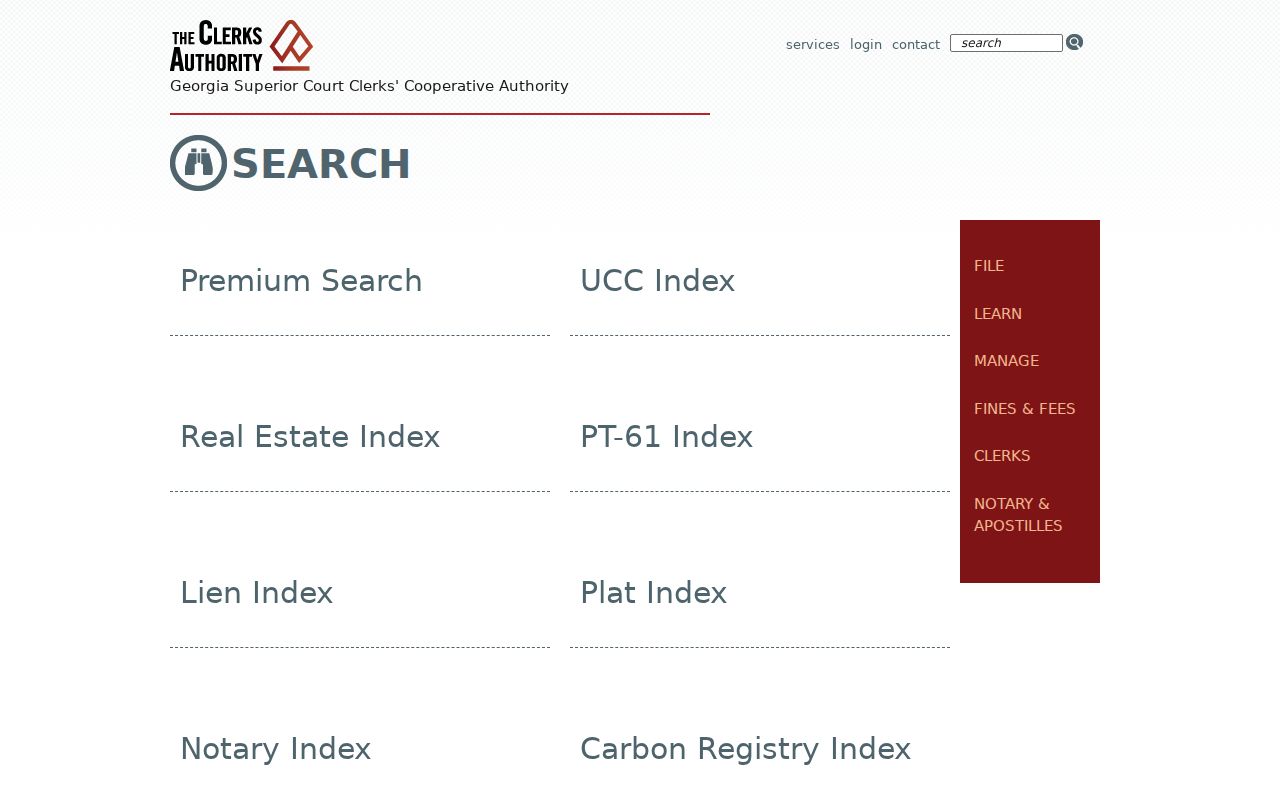
The gateway confirms the right index family for Colquitt County. Every result still needs checking. Each hit must match the county and the same parcel before it joins the chain. Search by grantor or grantee, county book-page, date range, party type, or geographic scope. Subdivision, unit, block, and lot fields appear where participating data supports them. Some image access requires an account. Note: Save any gated index result, because its book-page or instrument number lets the Clerk pull the underlying property record directly.
Older Colquitt County Owners Continue Through Books and Microfilm
The Georgia Archives county microfilm index is a finding aid, not a set of deed images. Use it to locate holdings. The Clerk remains the first stop for deed books. A remote request works best with Colquitt County named, plus the book letter or number, page, parties, approximate date, and record type. Ask whether the copy is plain or certified. The county publishes no official deed-copy fee schedule online, so request current costs before ordering.
Walk the Colquitt County Deed Chain Backward
The backward walk repeats one move. The grantor in the newest transfer becomes the grantee you hunt in the next older deed, while the parcel's legal description stays fixed throughout Colquitt County property records.
- Find the current acquiring deed for the matching legal description.
- Read its grantor as the immediate former owner and save the recording reference.
- Search that grantor as an earlier grantee, checking name variants and dates.
- Repeat until online access stops, then continue with the last book-page at the Clerk.
- Grantor and grantee
- The conveying party and receiving party named in an instrument.
- Chain of title
- The ordered sequence of transfers affecting the same property.
- Reverse index
- The path used to find a grantor's earlier acquisition as grantee.
- Legal description
- The recorded land identity that remains useful when an address changes.
Probate May Break a Simple Colquitt County Owner Sequence
A death can reroute title through a will, administration, year's support, court order, or executor's deed instead of an ordinary sale. Search the former owner's name. Try "Estate of" that name too. Add the executor or administrator and the eventual grantee. Colquitt Probate Court offers no dedicated public search, so a counter or records request may be needed to reach those files. A death certificate proves timing, not title. Use probate to learn who held authority, then return to the instrument affecting the Colquitt County parcel.
Moultrie's 1937 Directory Bridges Former Owners to Old Addresses
The 1937-38 Moultrie city directory lists residents, streets, businesses, public officials, and telephone listings. The broader collection spans 1906 to 1970. It links names to old Moultrie addresses. It cannot prove ownership or occupancy. USPS created ZIP 31788 in 2002 for 3,101 deliveries that had used 31768. An old ZIP is a bridge, not proof. Triangulate the directory year, newspaper notices, the current parcel number, legal description, and deed reference before trusting any match.
Recorded Plats Keep Colquitt County Lots Connected
A subdivision plat can reconnect previous owners when a deed describes land by lot and block instead of a street number. Search the GSCCCA Plat Index by name or book-page. Request the recorded image if needed. A planning application is not the final recorded plat. Match the plat name, lot, block, roads, easements, and later vacations against the deeds in the chain. Boundaries deserve a professional eye. For an exact boundary dispute, the plat supports the deed records but never replaces a survey.
Use Name Variants for Colquitt County Past Owners
Indexes handle names inconsistently. Initials and married names appear in many forms. Trustees, estates, and business entities add still more variation. Run each reasonable variant separately, then set aside any result that does not match the parcel. For a company, copy the deed spelling exactly and pull entity context from the Georgia business search.
An entity record may show status, control number, agent, or officer. That does not prove the company owned this parcel. Only a matching conveyance and legal description tie the organization to the former-owner chain.
Trust names need equal caution. The grantee of record may be the trustee, the trust, or both, and a later index may reverse or abbreviate the style. Search each visible component. Accept a result only when its date and land description fit the same Colquitt County chain, and copy estate and entity spellings into your log exactly as indexed so another searcher can repeat the step.
Know How Far Colquitt County Ownership Records Go
Online indexing is a doorway, not the boundary. Older owners often hide in the Clerk's deed books. Archives microfilm finding aids, plats, probate files, newspapers, and the Ellen Payne Odom Genealogy Library can all carry the trail further back. No single earliest online image exists for Colquitt County. The responsible endpoint is the oldest documented transfer or book reference you can support.
Keep a log for every source you touch. Record the source URL or office, access date, grantor and grantee, recording date, deed type, book-page, legal description, and any gap. A directory, obituary, tax roll, or newspaper item is supporting evidence. It is not a conveyance. That distinction keeps a promising clue from being mistaken for a missing deed and makes the next courthouse or archive request far more precise.
Sources sometimes conflict. Keep both citations. Ask the record custodian about the index or image rather than silently choosing whichever spelling, date, acreage, or party name looks convenient. A documented conflict is itself useful. It pinpoints the exact link in the chain that needs a certified copy or professional examination.
History is not a title opinion. Use former-owner records for house history, estate work, and property diligence. Gaps and indexing errors may require professional review, and no record may be used to stalk, harass, or harm a living person.